
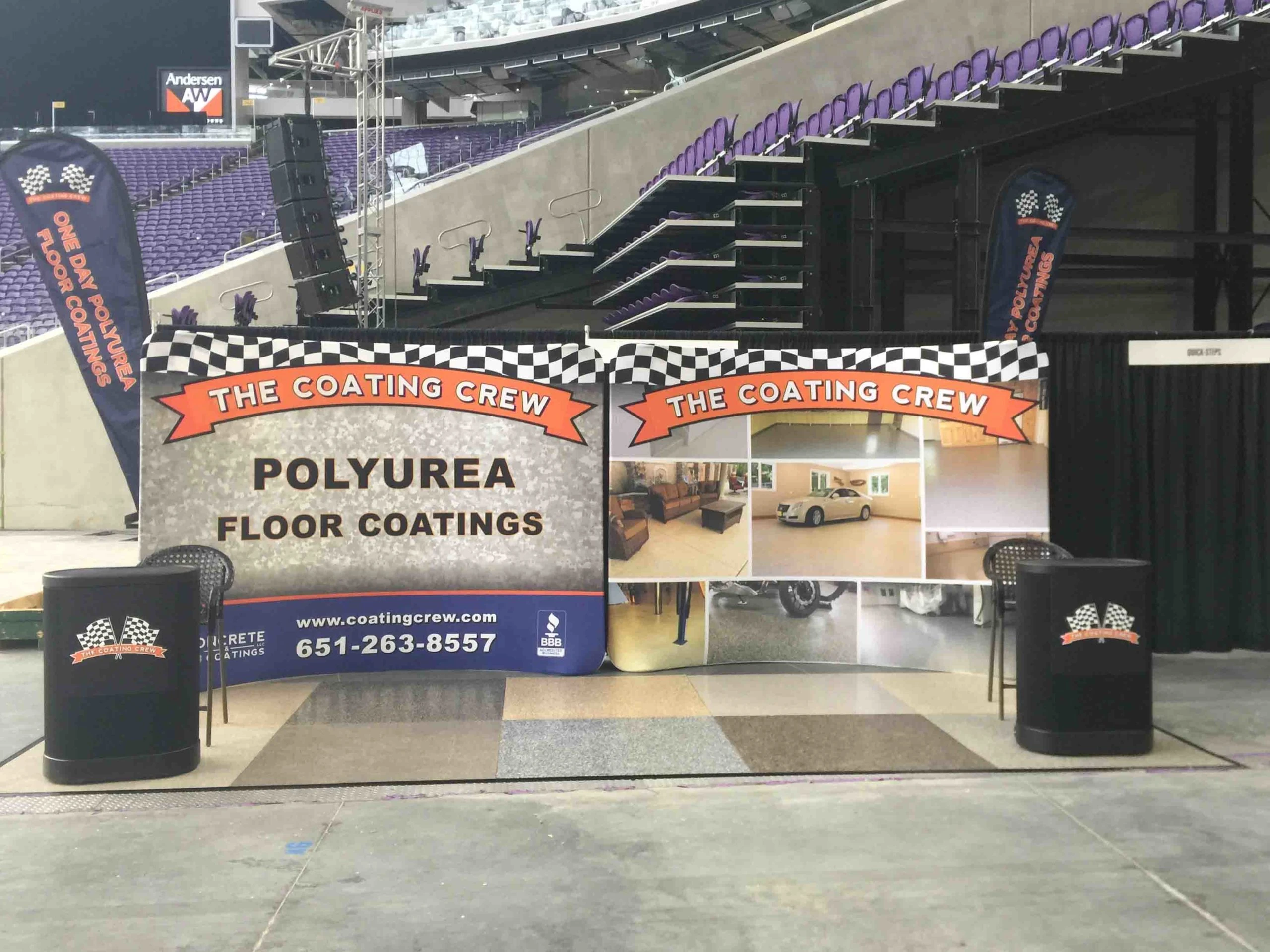
I&D runs against the venue's exhibitor manual and the show's published move-in and move-out schedule. Dock timing, crew calls, and rigging approvals all come from those documents.
At Central Bank Center the dock and rigging path is set by the venue's rules and dimensions document; hotel installs at Hyatt, Hilton, or Marriott City Center route through the in-house event team instead.
A clean install starts before the truck rolls: drawings with the crew, graphics labeled to position, hardware kits packed correctly, and a single named lead on the floor.
These pages cover the I&D scope, who does what during the install window, and how strike runs against the venue's posted dismantle hours.
Trade Show Installation and Dismantle priorities
- Keep Trade Show Installation and Dismantle tied to the actual show outcome, not a vague category label.
- Leave room for storage, reuse, and return freight so the next cycle starts cleanly.
- Give the floor one clear lead so live decisions stay controlled during install and strike.
Lexington as a trade show city
Lexington runs a working trade-show calendar anchored on Central Bank Center, the downtown convention spine, and the surrounding host-hotel ring.
The city has more than one strong event node. Downtown is the convention core; Newtown Pike is the resort spine; south Lexington carries suburban meeting inventory; the Bluegrass corridor extends the regional drive radius.
For trade show installation and dismantle, Lexington's position in central Kentucky between I-75 and I-64 makes it practical for drive-in attendees from the surrounding region and fly-in attendees through Blue Grass Airport.
The market sells as a business destination, a horse-country destination, and a bourbon-country destination depending on the audience, which gives planners more than one angle to work with.
Where Lexington shows actually happen
The convention floor where most Lexington shows happen is Central Bank Center; the building's exhibition hall, ballrooms, and arena adjacency anchor the city's event capacity.
Within walking distance of the convention floor, the three host hotels (Hyatt Regency, Hilton Downtown, Marriott City Center) hold breakouts and overflow.
Off the downtown grid, Griffin Gate handles north-side resort work and the south Lexington belt (Campbell House, Embassy Suites) carries suburban meetings.
Venue selection is the upstream lever on the dismantle. Convention floor versus hotel ballroom changes labor model, freight, AV, and budget shape.
Why Trade Show Services of Lexington
On the dismantle, the same team owns design through strike. That continuity is what keeps quality steady across multiple shows.
The relationships at the venue desks matter for the dismantle. Local teams have walked into Central Bank Center, the host hotels, and Griffin Gate enough times to know what gets prioritized.
On programs that recur, the per-show economics improve because the same team isn't relearning the booth or the venue each cycle.
Who handles what during the Lexington install window
Inside the install window for the dismantle, the named on-site lead holds the drawing, the punch list, and the labor calls. That role doesn't rotate; it stays with one person from crate-open through final strike.
The venue's exhibitor services desk handles utility orders, rigging approvals, and the published service paperwork. The show GC (where there is one) handles drayage and the master schedule.
The labor crew runs against the venue's labor model. At Central Bank Center the crew works the building's published rules; at downtown hotels the crew works through the property's events team.
Communication runs on a daily report during install, real-time updates during show hours, and a written debrief delivered within a day of strike.
Where Lexington shows cluster
Most Lexington shows cluster downtown around Central Bank Center, the host-hotel ring along Vine, High, and Main, and the walkable restaurant and hospitality blocks around Rupp Arena.
For the dismantle, the secondary clusters are the Newtown Pike resort corridor anchored on Griffin Gate, the south Lexington belt around The Campbell House and Embassy Suites Lexington Green, and the regional Bluegrass corridor (Versailles, Georgetown, Richmond, Frankfort, Nicholasville, Winchester) that extends the drive market.
Scope on a trade show installation and dismantle project
An I&D scope for the dismantle runs against the venue's exhibitor manual and the show's published move-in and move-out schedule.
The scope covers crate retrieval from drayage, uncrating, structural assembly, graphic application, AV and lighting installation, show-hours coverage, strike, re-crating, manifest handling, and outbound freight handoff.
One named on-site lead carries the install. The same person holds the drawing, the punch list, and the labor calls from crate-open through final strike.
Drayage and material handling are billed by the venue's GC. The I&D crew works the booth itself, not the freight movement on or off the dock.
I&D windows in Lexington match the show's published schedule, usually a 2 to 4 day load-in for full-floor exhibits and 4 to 8 hours for in-line booths.
From first call to strike
The opening conversation on the dismantle establishes show, venue, dates, and the actual deliverable the floor has to hit.
Strategy and design carry the project from brief to fabrication-ready set, including budget that maps to real venue rates.
Coordination phase nails down the venue side. Discount cutoffs drive the calendar; utility, rigging, and labor all file in writing.
Production runs build through dry-fit and crating. Graphics, AV, and rentals all integrate before anything ships.
Install operates inside the published move-in. The lead doesn't rotate at doors; coverage continues into show hours.
The end of the engagement is strike on schedule, freight back to storage, and a same-day debrief that informs the next program.
Cost and lead time
Cost for the dismantle scales with the venue's published rates, the booth's size, the freight pattern, and the supervision days the program needs.
The levers: build path (custom, modular, or rental), footprint, venue service fees, graphics, freight, and supervision. A small inline and a 30x50 island with a double deck don't share much beyond the same vocabulary.
Lead time for the dismantle: Install windows in Lexington follow the show's published schedule, usually a 2 to 4 day load-in for full-floor exhibits and 4 to 8 hours for in-line booths.
How project performance gets measured
The numbers on a the dismantle program live in two places: the floor execution scorecard, and the lead and pipeline ledger that runs after strike.
Both layers have to land. Clean execution with no pipeline is wasted spend; pipeline with venue callouts is reputation damage.
Closing the loop happens in the debrief. The booth's specific zones get scored against attendee behavior and that data drives how the next the dismantle cycle plans.
Trade Show Installation and Dismantle planning questions
Do you work at Hilton Lexington/Downtown?
Yes. Hilton Lexington/Downtown sits steps from Rupp Arena and Lexington Center in the downtown core.
How does labor work in Lexington?
It runs venue by venue. At Marriott Lexington Griffin Gate Golf Resort & Spa, itself as a meeting and event hotel on Newtown Pike, which makes it relevant for retreat, hospitality, and overflow planning.
How much lead time is ideal?
Custom builds run best with 16 to 20 weeks of lead time. Rentals take 8 to 12 weeks.
What information kicks off a project?
The show, the venue, the booth number, the dates, and a target budget range. From those, an initial scope and a realistic cost come back within a few days.
Who runs the booth on-site?
One named show-site lead runs the install, the show hours, and the strike. That person carries the floor plan and the punch list from crates to doors and reports up once a day.
Can the booth travel to the next city on our calendar?
Same structure, swappable graphics, standard crates.
What happens if something breaks during show hours?
The on-site lead handles it.