
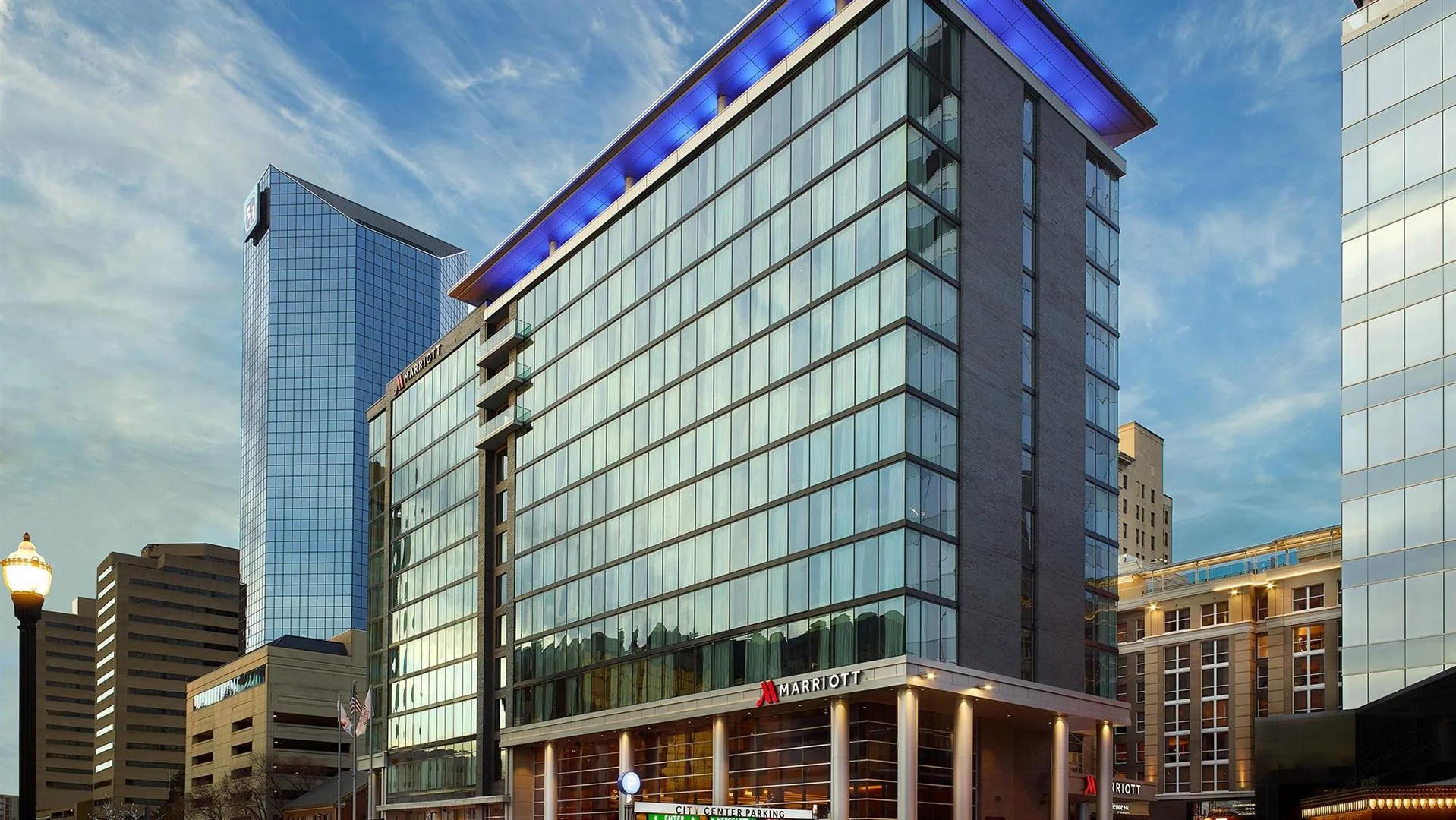
The Marriott sits at 121 W Vine in the downtown core, with Marriott positioning the property as a meetings, weddings, and events destination at the heart of Lexington.
Its angle is modern hospitality with a credible meetings practice. Corporate programs, planner-facing events, executive meetings, and downtown overflow all fit the property cleanly.
Operationally, the work routes through the Marriott events team. Catering, AV, and labor align with the brand's standards and the hotel's posted meeting room inventory.
These pages cover how Lexington Marriott City Center fits a downtown program, what the events inventory supports, and where the property sits relative to the convention center campus.
Verified venue facts
- Marriott positions the hotel at the heart of downtown Lexington.
- The events section gives the property a genuine meetings-and-weddings angle that supports corporate programs and planner-facing events.
- Its downtown placement makes it a clean fit for meetings that need modern hospitality without leaving the city center.
Lexington Marriott City Center venue priorities
- Align graphics, AV, and utility requests with the same calendar as the booth work.
- Leave room for storage, reuse, and return freight so the next cycle starts cleanly.
- Give the floor one clear lead so live decisions stay controlled during install and strike.
Lexington Marriott City Center at a glance
The center sits at 121 W Vine St in central downtown Lexington, with a meetings and events section that supports corporate programs and planner-facing work right in the city center.
Marriott programs route through the hotel's events team. Meeting space, catering, AV, and group-travel logistics follow the brand's posted standards.
Scope at the Marriott typically covers executive meetings, client hospitality, breakout rooms, business conferences, and downtown overflow tied into a larger downtown program.
The address (121 W Vine St, Lexington, KY 40507) and the property's role in the host-hotel or resort ring shape how a program builds its agenda around the venue.
Scope at Lexington Marriott City Center
Scope on a the center engagement starts from the property's role in the larger Lexington program, not from a generic booth template.
Scope at the Marriott typically covers executive meetings, client hospitality, breakout rooms, business conferences, and downtown overflow tied into a larger downtown program.
Operationally, the work routes through the center's events team. Utility orders, AV, catering, and labor follow the property's posted standards.
The scope excludes show organizer fees, client staff travel, and internal client tools; those stay on the client side and route through coordination.
For programs that pair the center with downtown convention work, the scope includes the coordination between the two paperwork lanes.
Who handles what during the Lexington install window
Inside the install window for the center, the named on-site lead holds the drawing, the punch list, and the labor calls.
The labor crew runs against the venue's labor model.
Lexington as a trade show city
The city has more than one strong event node.
For the center, Lexington's position in central Kentucky between I-75 and I-64 makes it practical for drive-in attendees from the surrounding region and fly-in attendees through Blue Grass Airport.
From first call to strike
The opening conversation on the center establishes show, venue, dates, and the actual deliverable the floor has to hit.
Strategy and design carry the project from brief to fabrication-ready set, including budget that maps to real venue rates.
Coordination phase nails down the venue side. Discount cutoffs drive the calendar; utility, rigging, and labor all file in writing.
Production runs build through dry-fit and crating. Graphics, AV, and rentals all integrate before anything ships.
Install operates inside the published move-in. The lead doesn't rotate at doors; coverage continues into show hours.
The end of the engagement is strike on schedule, freight back to storage, and a same-day debrief that informs the next program.
Cost and lead time
Cost for the center scales with the venue's published rates, the booth's size, the freight pattern, and the supervision days the program needs.
Lead time for the center: Custom: 16 to 20 weeks. Rental: 8 to 12.
Outcomes we optimize for
What a good the center engagement delivers: on-time floor-ready, no venue inspection issues, undisturbed show hours, closeout report inside a day.
Programs that take the center seriously measure leads, meetings, and pipeline. Everything the team does on build and install is upstream of those three.
Post-show review connects technical data to physical layout. Demo station performance, meeting area effectiveness, graphic dwell time, all inform the next iteration.
Why Trade Show Services of Lexington
On the center, the same team owns design through strike. That continuity is what keeps quality steady across multiple shows.
The relationships at the venue desks matter for the center. Local teams have walked into Central Bank Center, the host hotels, and Griffin Gate enough times to know what gets prioritized.
On programs that recur, the per-show economics improve because the same team isn't relearning the booth or the venue each cycle.
Lexington Marriott City Center venue questions
How does labor work in Lexington?
It runs venue by venue.
How much lead time is ideal?
Custom builds run best with 16 to 20 weeks of lead time. Rentals take 8 to 12 weeks.
What information kicks off a project?
The show, the venue, the booth number, the dates, and a target budget range. From those, an initial scope and a realistic cost come back within a few days.
Who runs the booth on-site?
One named show-site lead runs the install, the show hours, and the strike. That person carries the floor plan and the punch list from crates to doors and reports up once a day.
Can the booth travel to the next city on our calendar?
Same structure, swappable graphics, standard crates.
What happens if something breaks during show hours?
The on-site lead handles it.