
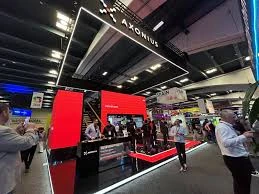
Activation work is designed around a memorable interaction, not a static booth. The deliverable is an experience: photo, sample, demo, performance, or environment.
Lexington activations land inside the convention floor at Central Bank Center, in hotel ballrooms, or as side events at neighborhood venues in Chevy Chase or downtown.
Operationally, activations have to pass venue rules just like any booth: structural sign-off, electrical loads, fire marshal review where it applies, and labor calls under the manual.
These pages cover what activation work includes, how the budget line items break down, and where Lexington venues constrain or enable the build.
Brand Activation Services priorities
- Align graphics, AV, and utility requests with the same calendar as the booth work.
- Leave room for storage, reuse, and return freight so the next cycle starts cleanly.
- Give the floor one clear lead so live decisions stay controlled during install and strike.
Lexington as a trade show city
The city has more than one strong event node.
For brand activation services, Lexington's position in central Kentucky between I-75 and I-64 makes it practical for drive-in attendees from the surrounding region and fly-in attendees through Blue Grass Airport.
Lexington convention venues and meeting properties
South Lexington adds The Campbell House at 1375 S Broadway with more than 25,000 square feet of meeting space and Embassy Suites Lexington Green at 245 Lexington Green Cir as the suite-hotel option.
For the services, picking the right property is the upstream decision. The venue's published rules drive everything that follows: utility orders, rigging, labor, freight.
Why Trade Show Services of Lexington
On the services, the same team owns design through strike. That continuity is what keeps quality steady across multiple shows.
The relationships at the venue desks matter for the services. Local teams have walked into Central Bank Center, the host hotels, and Griffin Gate enough times to know what gets prioritized.
On programs that recur, the per-show economics improve because the same team isn't relearning the booth or the venue each cycle.
Lexington labor and venue services
Labor in Lexington follows the venue, not the city. Each property publishes its own rules, and a Brand Activation Services engagement has to read them per show.
The services labor planning is per-venue. The split between house crew and outside labor is whatever the venue publishes, not a citywide standard.
Show-services paperwork files through the venue's own portal or form, with a discount cutoff sitting 30 to 45 days before show open.
The discipline that prevents most issues: current manual in hand, orders inside the cutoff window, EAC packet filed early.
Where Lexington shows cluster
Most Lexington shows cluster downtown around Central Bank Center, the host-hotel ring along Vine, High, and Main, and the walkable restaurant and hospitality blocks around Rupp Arena.
For the services, the secondary clusters are the Newtown Pike resort corridor anchored on Griffin Gate, the south Lexington belt around The Campbell House and Embassy Suites Lexington Green, and the regional Bluegrass corridor (Versailles, Georgetown, Richmond, Frankfort, Nicholasville, Winchester) that extends the drive market.
Scope on a brand activation services project
Scope on a the services project in Lexington starts from the show, the venue, and the date, then walks the line items the program actually needs rather than a generic exhibit menu.
Activation scope covers concept design, fabrication of branded structure, content and AV integration, brand ambassador staffing where requested, run-of-event coverage, and strike with documentation for the next stop on the calendar.
The boundary line matters: show organizer fees, client staff travel, and any software or vendors the client owns directly stay outside the services engagement and route through coordination.
For programs that repeat, the services scope adds storage, refurbishment, graphic rotation, and the freight loop that ties the next show on the calendar to this one.
A clean the services scope at the start saves the most money. Surprises during install are usually scope problems, not crew problems.
The process from start to finish
Phase one on the services is the brief. The show, the venue, the audience, the calendar, and the budget all go on the table first.
Brief and drawings come out of strategy and design. Budget gets framed against the venue's published rates.
Venue paperwork moves on coordination cutoffs. Utility, rigging, labor calls, EAC if applicable all file in writing.
Production runs the build through dry-fit. Catching problems on the shop floor saves labor calls at the venue.
Move-in, show hours, and move-out all run with one named lead, all against the venue's published windows.
The post-show writeup lands inside a day and feeds directly into the next planning cycle.
Cost and lead time
Cost for the services scales with the venue's published rates, the booth's size, the freight pattern, and the supervision days the program needs.
Lead time for the services: Custom: 16 to 20 weeks. Rental: 8 to 12.
Outcomes we optimize for
What a good the services engagement delivers: on-time floor-ready, no venue inspection issues, undisturbed show hours, closeout report inside a day.
Programs that take the services seriously measure leads, meetings, and pipeline. Everything the team does on build and install is upstream of those three.
Post-show review connects technical data to physical layout. Demo station performance, meeting area effectiveness, graphic dwell time, all inform the next iteration.
Brand Activation Services planning questions
Do you work at Marriott Lexington Griffin Gate Golf Resort & Spa?
Yes. The resort sits on Newtown Pike and gives planners a north-Lexington hotel and event option outside the downtown core.
How does labor work in Lexington?
It runs venue by venue.
How much lead time is ideal?
Custom builds run best with 16 to 20 weeks of lead time. Rentals take 8 to 12 weeks.
What information kicks off a project?
The show, the venue, the booth number, the dates, and a target budget range. From those, an initial scope and a realistic cost come back within a few days.
Who runs the booth on-site?
One named show-site lead runs the install, the show hours, and the strike. That person carries the floor plan and the punch list from crates to doors and reports up once a day.
Can the booth travel to the next city on our calendar?
Same structure, swappable graphics, standard crates.
What happens if something breaks during show hours?
The on-site lead handles it.