
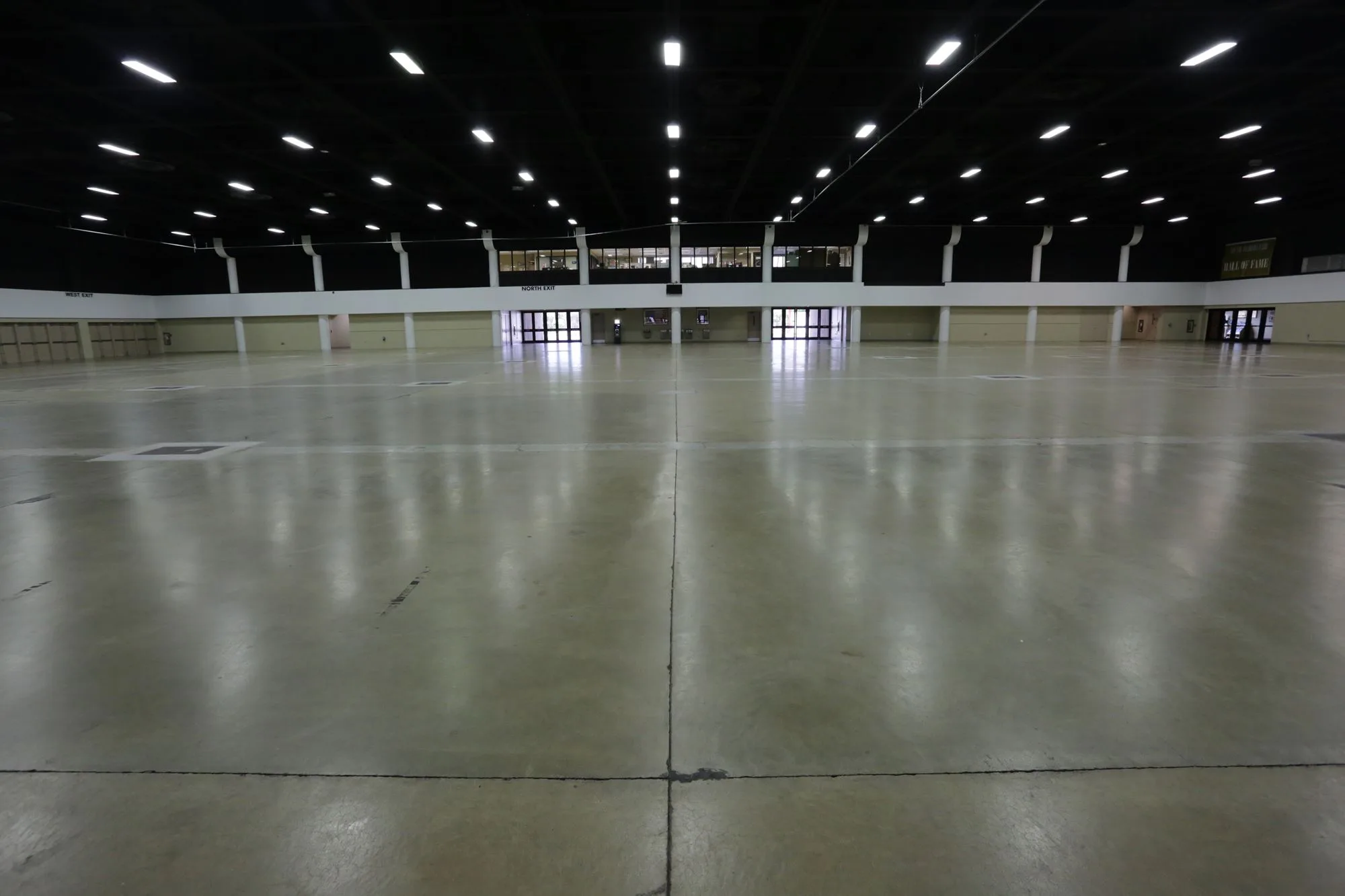
Central Bank Center anchors downtown Lexington's convention core. The campus carries the city's largest exhibit floor and connects directly to the surrounding hotel ring along Vine, High, and Main.
Operationally, the venue runs on its own rules and dimensions documents. Dock windows, rigging approvals, utility orders, and labor calls all come out of those publications.
Programs working the center file utility orders through the venue's exhibitor portal, schedule rigging through the in-house team, and route freight through the building's drayage program.
These pages cover what scope at the center actually looks like, how the published rules shape the project, and where to plan around the venue's posted move-in and move-out windows.
Verified venue facts
- Downtown Lexington's flagship convention campus anchors the city's largest event floor and sits next to the arena and hotel ring.
- The public venue documents make it clear that organizers and exhibitors should work from the current rules, dimensions, and service instructions rather than assuming a generic convention-center process.
- The complex is the best fit when a project needs a true exposition hall, ballroom support, and a centralized downtown guest pattern.
Central Bank Center venue priorities
- Align graphics, AV, and utility requests with the same calendar as the booth work.
- Leave room for storage, reuse, and return freight so the next cycle starts cleanly.
- Give the floor one clear lead so live decisions stay controlled during install and strike.
About Central Bank Center
Central Bank Center sits at 430 W Vine St in downtown Lexington and serves as the city's flagship convention campus.
The complex carries the largest exhibit floor in the market and connects directly to the surrounding hotel ring along Vine, High, and Main.
The venue runs on its own published rules and dimensions documents. Dock windows, rigging approvals, utility orders, and labor calls all come out of those publications.
The campus also includes ballroom support, which works alongside the exhibition hall for general session and breakout programming.
Programs at the center benefit from the centralized downtown guest pattern: attendees walk between the convention floor, the host hotels, and the surrounding restaurants without long transit hops.
What drives the Lexington calendar
Outside those windows, the venues run smaller programs.
For the center, that pattern matters because dock windows, rigging slots, and labor capacity compress on peak weeks. Booking off-peak opens up the calendar.
For the center specifically, picking the right week changes the cost line and the venue options. Peak weeks cost more and offer fewer choices.
What makes our work different
Trade Show Services of Lexington runs the center as a local team. Design, fabrication, graphics, and show-site crews share the same shop and the same playbook, which is how quality survives across a multi-show calendar.
The compounding effect across a year is real. The center that runs the second time is faster than the first; the third runs on memory and documentation rather than first-principles planning.
Operational rules on the Lexington floor
Floor operations for the center follow each venue's own manual.
Practical rule: confirm utilities, rigging, and labor in writing before fabrication finishes, not during install.
Scope at Central Bank Center
Scope at the center starts from the venue's published rules and dimensions document. Utility orders, rigging approvals, and exhibitor service requests run through the building's portal.
For the center, that means the line items follow the convention center's posted rates rather than a hotel events estimate.
Rigging and hanging signs need approval against the venue's published path. Drayage runs through the center's program, with weight tickets and manifests on file before the truck rolls.
Labor calls coordinate with the in-house exhibitor services desk. Confirm crew counts, install hours, and any specialty trades against the current manual rather than assuming a generic convention-center process.
The scope explicitly accounts for the venue's posted move-in and move-out windows. Building access outside those windows requires written approval.
What an engagement actually looks like
A the center engagement opens with a scope conversation: show, venue, booth number, dates, budget frame. Specifics produce better plans than generalities.
After the brief, focus shifts to the building.
One named show-site lead runs the install.
Pricing and scheduling
Pricing for the center scales with the venue's published rates, the booth's footprint, the freight pattern, and the labor calls. There's no single number that fits every program.
Rentals run 8 to 12.
What a successful project looks like
A successful the center project in Lexington lands the booth on time, passes venue inspection on the first walk, runs without incident through show hours, and crates back out cleanly.
Measurable outcomes for the center live in the lead and pipeline numbers.
Central Bank Center venue questions
How does labor work in Lexington?
It runs venue by venue.
How much lead time is ideal?
Custom builds run best with 16 to 20 weeks of lead time. Rentals take 8 to 12 weeks.
What information kicks off a project?
The show, the venue, the booth number, the dates, and a target budget range. From those, an initial scope and a realistic cost come back within a few days.
Who runs the booth on-site?
One named show-site lead runs the install, the show hours, and the strike. That person carries the floor plan and the punch list from crates to doors and reports up once a day.
Can the booth travel to the next city on our calendar?
Same structure, swappable graphics, standard crates.
What happens if something breaks during show hours?
The on-site lead handles it.