
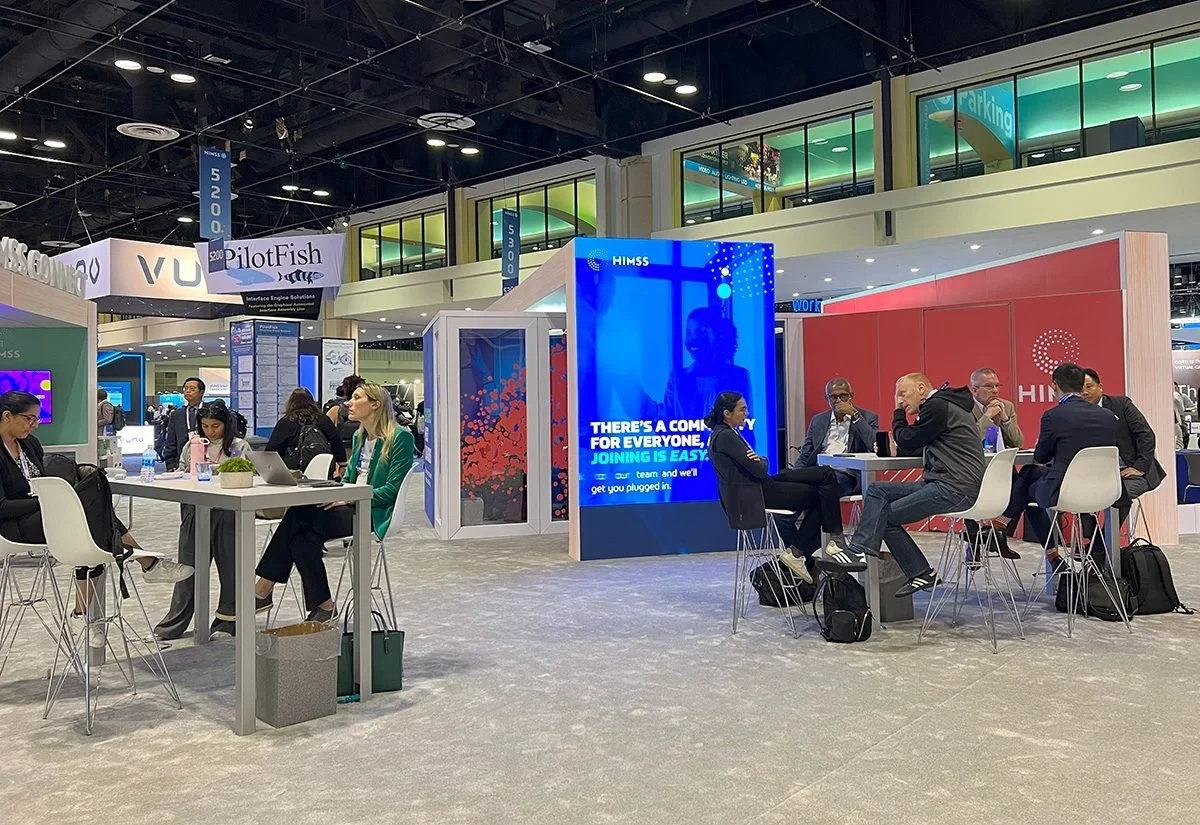
Supervision is what turns a stack of crates into a working booth. The lead carries the drawing set, the labor schedule, the AV cue sheet, and the venue's exhibitor manual all in the same head.
On Lexington shows the supervisor talks to the venue's exhibitor services desk, the show GC, and the labor crew leads on the same floor. One person with one set of decisions.
Show hours are part of the scope, not a separate phase. The supervisor stays present for tech breaks, sponsor changes, and venue requests so the client team can keep working booth visitors.
These pages cover what supervision delivers, how the role runs across the install, show-hours, and strike, and what the post-show debrief looks like.
Show-Site Supervision priorities
- Keep Show-Site Supervision tied to the actual show outcome, not a vague category label.
- Leave room for storage, reuse, and return freight so the next cycle starts cleanly.
- Give the floor one clear lead so live decisions stay controlled during install and strike.
Lexington trade show market
The Lexington market for show-site supervision runs on a small set of venues and a clear regional drive radius.
For the supervision, the practical question is which venue and which week.
The strongest programs match the venue to the audience.
Lexington convention venues and meeting properties
South Lexington adds The Campbell House at 1375 S Broadway with more than 25,000 square feet of meeting space and Embassy Suites Lexington Green at 245 Lexington Green Cir as the suite-hotel option.
For the supervision, picking the right property is the upstream decision. The venue's published rules drive everything that follows: utility orders, rigging, labor, freight.
Lexington labor and venue services
Labor in Lexington follows the venue, not the city. Each property publishes its own rules, and a Show-Site Supervision engagement has to read them per show.
The supervision labor planning is per-venue. The split between house crew and outside labor is whatever the venue publishes, not a citywide standard.
Show-services paperwork files through the venue's own portal or form, with a discount cutoff sitting 30 to 45 days before show open.
The discipline that prevents most issues: current manual in hand, orders inside the cutoff window, EAC packet filed early.
The main Lexington event areas
Downtown Lexington carries the convention core for the supervision: Central Bank Center, the surrounding host hotels, and the walkable hospitality pattern along Vine, High, and Main.
Outside downtown, work also runs the Newtown Pike resort corridor at Griffin Gate, the south Lexington belt around The Campbell House and Embassy Suites Lexington Green, and the regional Bluegrass towns of Versailles, Georgetown, Richmond, Frankfort, Nicholasville, and Winchester.
Scope on a show-site supervision project
A supervision scope for show-site supervision puts one named lead on the floor from crate-open through final strike.
The scope covers install lead, daily reports during build, show-hours coverage, on-floor problem solving, strike management, manifest signoff, and a written post-show debrief delivered within a day.
The supervisor doesn't replace the GC's exhibitor services desk; that desk handles venue order changes while the supervisor handles the booth's own running list.
Show hours are part of the scope, not an extra. The supervisor stays present for tech breaks, sponsor changes, and venue requests so the client team keeps working visitors.
Supervisors arrive 24 to 48 hours before doors and stay through final crate handoff to the freight company.
The process from start to finish
Phase one on the supervision is the brief. The show, the venue, the audience, the calendar, and the budget all go on the table first.
Brief and drawings come out of strategy and design. Budget gets framed against the venue's published rates.
Venue paperwork moves on coordination cutoffs. Utility, rigging, labor calls, EAC if applicable all file in writing.
Production runs the build through dry-fit. Catching problems on the shop floor saves labor calls at the venue.
Move-in, show hours, and move-out all run with one named lead, all against the venue's published windows.
The post-show writeup lands inside a day and feeds directly into the next planning cycle.
Budget and timeline
Budget for the supervision scales with how the booth is built, how big it is, what the venue charges for its services, what the graphics look like, how far the crates travel, and how many supervision days the program runs.
The line items on a typical the supervision budget: structure, graphics, AV, show services, labor, freight, supervision.
Timeline: Supervisors come in for the full install-through-strike window, usually arriving 24 to 48 hours before doors and staying through final crate handoff to the freight company.
Outcomes we optimize for
What a good the supervision engagement delivers: on-time floor-ready, no venue inspection issues, undisturbed show hours, closeout report inside a day.
Programs that take the supervision seriously measure leads, meetings, and pipeline. Everything the team does on build and install is upstream of those three.
Post-show review connects technical data to physical layout. Demo station performance, meeting area effectiveness, graphic dwell time, all inform the next iteration.
The advantage of a local Lexington team
For the supervision, working with a Lexington-based shop matters most when something goes wrong on install day.
Local presence also means the venue relationships are real.
Across a multi-show calendar, the compounding effect of one team running the supervision is fewer surprises and shorter install times.
Show-Site Supervision planning questions
Do you work at Hyatt Regency Lexington?
Yes. The downtown Hyatt is part of the convention-hotel ring tied directly to the Central Bank Center campus.
How does labor work in Lexington?
It runs venue by venue.
How much lead time is ideal?
Custom builds run best with 16 to 20 weeks of lead time. Rentals take 8 to 12 weeks.
What information kicks off a project?
The show, the venue, the booth number, the dates, and a target budget range. From those, an initial scope and a realistic cost come back within a few days.
Who runs the booth on-site?
One named show-site lead runs the install, the show hours, and the strike. That person carries the floor plan and the punch list from crates to doors and reports up once a day.
Can the booth travel to the next city on our calendar?
Same structure, swappable graphics, standard crates.
What happens if something breaks during show hours?
The on-site lead handles it.