
Trade show services is the umbrella over what actually happens on a Lexington exhibit floor: the build, the install, the show-hours coverage, and the dismantle.
The work runs against the venue's exhibitor manual and the show's published schedule. Central Bank Center has its own rules; downtown hotel events follow each property's standards.
Scope and price scale with the booth's size, the venue's service rates, the freight pattern, and the labor calls. There's no single standard number that fits every Lexington show.
These pages cover what the services include on a typical Lexington program, where the cost line items come from, and how the calendar runs from contract through closeout.
Trade Show Services priorities
- Align graphics, AV, and utility requests with the same calendar as the booth work.
- Leave room for storage, reuse, and return freight so the next cycle starts cleanly.
- Give the floor one clear lead so live decisions stay controlled during install and strike.
Lexington trade show market
The Lexington market for the services runs on a small set of venues and a clear regional drive radius.
For the services, the practical question is which venue and which week.
The strongest programs match the venue to the audience.
Where Lexington shows actually happen
The convention floor where most Lexington shows happen is Central Bank Center; the building's exhibition hall, ballrooms, and arena adjacency anchor the city's event capacity.
Within walking distance of the convention floor, the three host hotels (Hyatt Regency, Hilton Downtown, Marriott City Center) hold breakouts and overflow.
Off the downtown grid, Griffin Gate handles north-side resort work and the south Lexington belt (Campbell House, Embassy Suites) carries suburban meetings.
Venue selection is the upstream lever on the services. Convention floor versus hotel ballroom changes labor model, freight, AV, and budget shape.
The wider drive market beyond city limits covers Versailles, Georgetown, Richmond, Frankfort, Nicholasville, and Winchester, expanding the regional reach.
Audience and budget choose the layers: downtown convention floor, downtown hotels, Bluegrass regional. Most programs use one or two.
The advantage of a local Lexington team
For the services, working with a Lexington-based shop matters most when something goes wrong on install day.
Local presence also means the venue relationships are real.
Across a multi-show calendar, the compounding effect of one team running the services is fewer surprises and shorter install times.
Who handles what during the Lexington install window
Inside the install window for the services, the named on-site lead holds the drawing, the punch list, and the labor calls.
The labor crew runs against the venue's labor model.
Where Lexington shows cluster
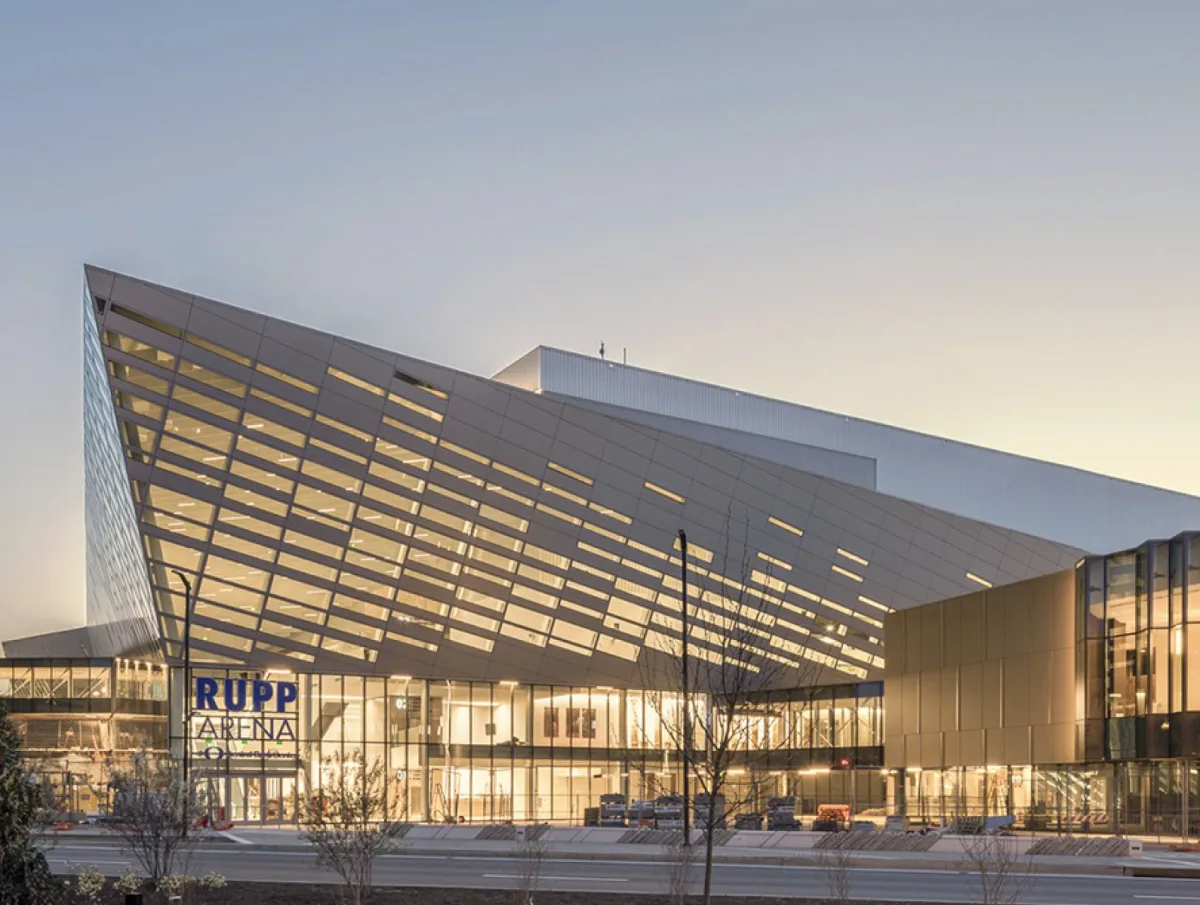
Most Lexington shows cluster downtown around Central Bank Center, the host-hotel ring along Vine, High, and Main, and the walkable restaurant and hospitality blocks around Rupp Arena.
For the services, the secondary clusters are the Newtown Pike resort corridor anchored on Griffin Gate, the south Lexington belt around The Campbell House and Embassy Suites Lexington Green, and the regional Bluegrass corridor (Versailles, Georgetown, Richmond, Frankfort, Nicholasville, Winchester) that extends the drive market.
Scope on a trade show services project
Scope on a the services project in Lexington starts from the show, the venue, and the date, then walks the line items the program actually needs rather than a generic exhibit menu.
The services scope covers booth design and fabrication or rental, graphics, AV, show-services orders through the venue, freight in and out, labor calls, supervised install, show-hours coverage, and strike with a written closeout report.
The boundary line matters: show organizer fees, client staff travel, and any software or vendors the client owns directly stay outside the services engagement and route through coordination.
For programs that repeat, the services scope adds storage, refurbishment, graphic rotation, and the freight loop that ties the next show on the calendar to this one.
A clean the services scope at the start saves the most money. Surprises during install are usually scope problems, not crew problems.
From first call to strike
The opening conversation on the services establishes show, venue, dates, and the actual deliverable the floor has to hit.
Strategy and design carry the project from brief to fabrication-ready set, including budget that maps to real venue rates.
Coordination phase nails down the venue side. Discount cutoffs drive the calendar; utility, rigging, and labor all file in writing.
Production runs build through dry-fit and crating. Graphics, AV, and rentals all integrate before anything ships.
Install operates inside the published move-in. The lead doesn't rotate at doors; coverage continues into show hours.
The end of the engagement is strike on schedule, freight back to storage, and a same-day debrief that informs the next program.
Budget and timeline
Budget for the services scales with how the booth is built, how big it is, what the venue charges for its services, what the graphics look like, how far the crates travel, and how many supervision days the program runs.
The line items on a typical the services budget: structure, graphics, AV, show services, labor, freight, supervision.
Outcomes we optimize for
What a good the services engagement delivers: on-time floor-ready, no venue inspection issues, undisturbed show hours, closeout report inside a day.
Programs that take the services seriously measure leads, meetings, and pipeline. Everything the team does on build and install is upstream of those three.
Post-show review connects technical data to physical layout. Demo station performance, meeting area effectiveness, graphic dwell time, all inform the next iteration.
Trade Show Services planning questions
Do you work at the Campbell House Lexington?
Yes.
How does labor work in Lexington?
It runs venue by venue.
How much lead time is ideal?
Custom builds run best with 16 to 20 weeks of lead time. Rentals take 8 to 12 weeks.
What information kicks off a project?
The show, the venue, the booth number, the dates, and a target budget range. From those, an initial scope and a realistic cost come back within a few days.
Who runs the booth on-site?
One named show-site lead runs the install, the show hours, and the strike. That person carries the floor plan and the punch list from crates to doors and reports up once a day.
Can the booth travel to the next city on our calendar?
Same structure, swappable graphics, standard crates.
What happens if something breaks during show hours?
The on-site lead handles it.