
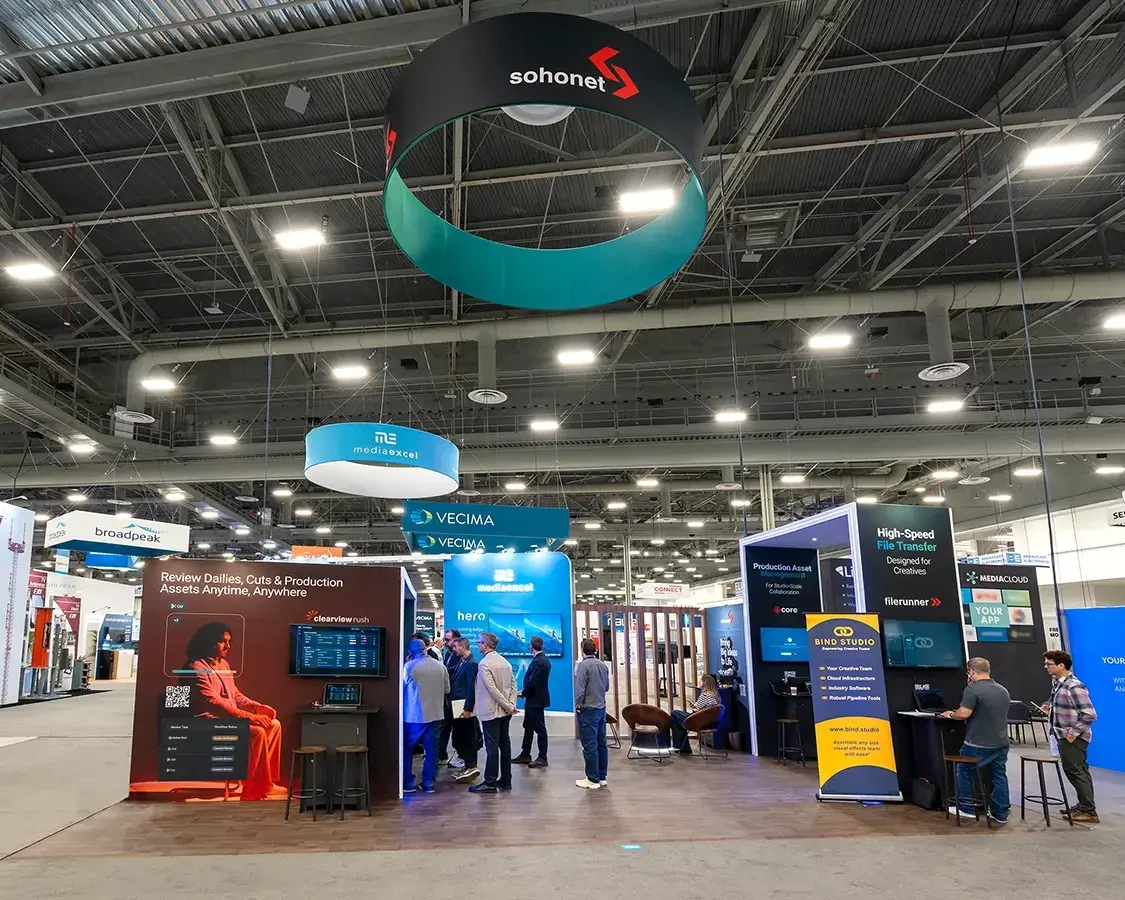
Strategy work is paid time spent before the booth gets ordered. The goal is to lock the show's actual purpose, the floor outcome, and the budget shape so the build phase has fewer guesses.
On a Lexington program that means the venue choice, the booth number, the sponsor activation map, and the lead-capture path get walked through together, not in separate meetings.
Outputs are practical: a brief the team can hand to a fabricator, a budget with line items the finance side can approve, and a calendar that respects the venue's exhibitor manual.
These pages cover what a strategy engagement delivers, how it priced, and where it sits relative to design, fabrication, and show-site work.
Trade Show Strategy and Pre-Show Planning priorities
- Keep Trade Show Strategy and Pre-Show Planning tied to the actual show outcome, not a vague category label.
- Leave room for storage, reuse, and return freight so the next cycle starts cleanly.
- Give the floor one clear lead so live decisions stay controlled during install and strike.
The buildings that host Lexington events
Central Bank Center at 430 W Vine carries the city's largest exhibit floor and serves as the convention anchor for downtown.
The downtown host-hotel ring (Hyatt Regency Lexington at 401 W High, Hilton Lexington/Downtown at 369 W Vine, Lexington Marriott City Center at 121 W Vine) supports breakouts and overflow for trade show strategy and pre-show planning when the convention floor is the primary venue.
Marriott Lexington Griffin Gate Golf Resort & Spa at 1800 Newtown Pike runs as the resort option north of downtown, with golf, spa, and meeting venues that fit retreats and hospitality-heavy programs.
South Lexington carries The Campbell House at 1375 S Broadway with more than 25,000 square feet of meeting space and Embassy Suites Lexington Green at 245 Lexington Green Cir as the suite-hotel option.
The regional Bluegrass corridor (Versailles, Georgetown, Richmond, Frankfort, Nicholasville, Winchester) extends the venue map outside the city for hospitality-led or community-scale programs.
How Lexington floor operations work
Floor operations for the planning follow the venue's posted rules. Central Bank Center publishes a current rules and dimensions document; downtown hotels distribute their own standards through the property events team.
Utility orders run through each venue's portal or order form, with discount cutoffs at 30 to 45 days before show open. Late orders cost more and may miss the install window.
Rigging approvals at Central Bank Center go through the venue's posted path; hotel ballrooms generally don't support rigging at the convention-center scale.
Labor calls coordinate with each venue's house team. Outside crews need EAC paperwork filed with the show GC or property before they can badge in.
Lexington neighborhoods and event districts
Downtown Lexington is the convention core: Central Bank Center, the host-hotel ring, and the walkable hospitality blocks along Vine, High, and Main.
North Lexington's Newtown Pike corridor runs the resort spine at Griffin Gate; south Lexington carries the suburban meeting belt around The Campbell House and Embassy Suites Lexington Green; the regional Bluegrass corridor (Versailles, Georgetown, Richmond, Frankfort, Nicholasville, Winchester) extends the drive radius.
Line items on a typical project
A the planning project in Lexington carries a predictable set of line items. Variation comes from the venue's published rates, the booth's footprint, and whether the program runs once or as a calendar.
Strategy deliverables include the show brief, footprint and floorplan logic, sponsor and activation mapping, the lead-path workflow, the budget framework, and a build-and-execution timeline keyed to the venue's published windows.
Good execution depends on tight handoffs. Every extra vendor in the chain adds a communication layer where details get lost.
For programs that repeat, asset management joins the engagement: storage, graphic rotation, refurbishment, and re-crating planned on a known cycle.
Renderings, engineered drawings, and graphic comps come from the design phase that follows; strategy stops at the brief.
How a project runs
Every the planning project opens with a scope conversation. Show, venue, booth number, dates, budget frame: specifics produce better plans than generalities.
Venue coordination follows. Dock windows, utility orders, rigging approvals, and labor calls confirm in writing before fabrication starts.
Production runs once venue details lock. Build, print, AV integration, rentals, and the floor playbook come together.
One named show-site lead runs the install. That person holds the plan and the punch list from crate-open through doors.
Show hours stay covered by the same lead. Tech breaks, sponsor changes, and venue requests handle without pulling the client team off booth duty.
Strike runs against the venue's posted window. A same-day debrief lands within 24 hours, ready to drive the next booking.
Pricing and scheduling
Pricing for the planning scales with the venue's published rates, the booth's footprint, the freight pattern, and the labor calls. There's no single number that fits every program.
Two programs with different footprints are different projects.
Strategy phases run 2 to 6 weeks. Anything shorter usually means the show is close enough that scope is already locked and the planner is just documenting it.
How project performance gets measured
Performance for the planning measures across two layers: technical (on-time install, no venue callouts, clean show hours, complete strike) and business (leads, floor-booked meetings, post-show pipeline).
The technical layer is hygiene; the business layer is return. A clean install with no leads is a problem; a messy install with leads is also a problem.
The post-show debrief connects the layers. Which demo station drew traffic, which meeting area closed conversations, which graphic zone earned dwell time, all of that feedback shapes the next the planning build.
What makes our work different
Trade Show Services of Lexington runs the planning as a local team.
The compounding effect across a year is real. The planning that runs the second time is faster than the first; the third runs on memory and documentation rather than first-principles planning.
The Lexington event landscape
Lexington's event landscape for the planning runs through Central Bank Center, the downtown host-hotel ring, the Newtown Pike resort spine at Griffin Gate, and the regional Bluegrass corridor.
The audience tilts toward university and healthcare programs through UK, the manufacturing economy anchored on Toyota in Georgetown, the equine and bourbon business across the Bluegrass, and the association and financial programs that anchor downtown.
For the planning, that mix is the buyer pool: the people whose attention the program has to earn.
Calendar pressure compresses around peak conference weeks; off-peak weeks open up venue choice and labor capacity.
Trade Show Strategy and Pre-Show Planning planning questions
Do you work at Central Bank Center?
Yes. Downtown Lexington's flagship convention campus anchors the city's largest event floor and sits next to the arena and hotel ring.
How does labor work in Lexington?
It runs venue by venue. Central Bank Center: the dimensions and specification sheet makes the convention campus a real exhibit and conference environment with current floor and access considerations that should shape the brief early.
How much lead time is ideal?
Custom builds run best with 16 to 20 weeks of lead time. Rentals take 8 to 12 weeks.
What information kicks off a project?
The show, the venue, the booth number, the dates, and a target budget range. From those, an initial scope and a realistic cost come back within a few days.
Who runs the booth on-site?
One named show-site lead runs the install, the show hours, and the strike. That person carries the floor plan and the punch list from crates to doors and reports up once a day.
Can the booth travel to the next city on our calendar?
Same structure, swappable graphics, standard crates.
What happens if something breaks during show hours?
The on-site lead handles it.